Family holidays in the Algarve tend to orbit the beach. Yes, the beaches are exceptional. But there’s a particular kind of afternoon when the beach isn’t the answer: when the kids are tired of the sand, when the adults need shade, when everyone needs something to do that isn’t lying down.
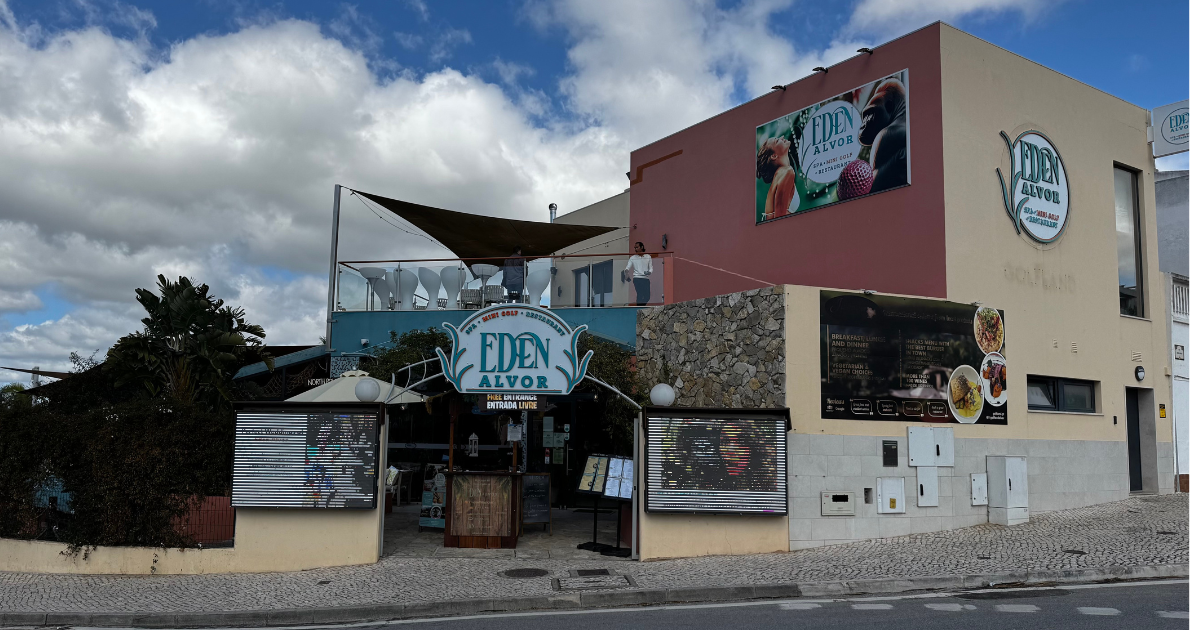
Eden Alvor is built for exactly that afternoon.
The headline activity is the 18-hole mini golf course, which runs through a tropical garden that is legitimately beautiful. Over 2,000 plants from more than 100 species, three animatronic characters who interact with golfers, a cascading waterfall, ambient birdsong and animal sounds, and enough variety between holes that the round stays interesting from first to last. Under-5s play free. Older kids get increasingly competitive around hole 8 or 9. Adults rediscover that they have opinions about putting technique.
After the golf, the courtyard is the next act. A kids’ play area sits alongside foosball tables, air hockey, a pool table, and arcade-style machines – racing, boxing, basketball. It’s the kind of games room that older siblings will monopolise while younger children discover the bouncy area and spring-loaded play equipment. Ice cream is available. Cold drinks are available. There is no obvious reason to leave.
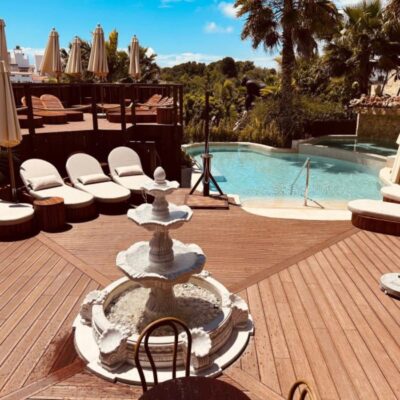
For families who want a longer day, adding the pool changes everything. The heated saltwater pool at Eden runs at around 29–30 degrees, which means it’s warm enough for even small children to enjoy without the usual winter-pool reluctance. Pool access includes sunbeds, and the half-day pricing (€12 for kids, €18 for adults) makes it reasonable for a full family group.
The practical truth about family days out is that they work when the adults get a moment to sit as well as the children get to also have fun. Eden provides both. The courtyard tables, the poolside sunbeds, the restaurant terrace — there are multiple places for a parent to put a drink down. Meanwhile the children have no shortage of things to keep them entertained.
It’s the kind of place families come back to. That’s usually the best evidence for how well a place is actually designed.